Access Tokens
Use access tokens (From Web)
Access tokens allow managers to access ExamDeveloper APIs that generate real-time data from projects and load it into custom reports or dashboards. Data is extracted from ExamDeveloper into Microsoft Excel by using the web connector ("Get Data From Web") or connecting an OData feed. Once you connect to ExamDeveloper data from the web, you can transform the data and use the Power Query Editor or load the data to an Excel grid.
|
{ |
The following APIs import data from the web:
- Question All Data API: Returns all data for all items in a project. It is the same data feed that is included in the JSON export of the All Data Custom Report.
- Question All Revisions API: Returns data for only one item, but for all revisions that item. Note that this JSON feed has a unique field, latestrevisionnumber, which is the revision number at time of the export (for a new export or refreshed data for an existing export).
- Statistics API: Returns statistics data for all items in a project. It is similar to the data feed that is included in the JSON export of the All Data Custom Report. (The API data includes all available analysis groups and sets.)
- Item Bank API: Returns data specific to the item bank including all defined languages and configurations. It lists the names and IDs of all projects that are associated with the item bank. The output will match the files that are exported with the JSON output of the Custom Report (itembank.json).
- Project API: Returns data specific to the project such as review states and project IDs. The output will match the files that are exported with the JSON output of the Custom Report (project.json).
 For information on the API endpoints and endpoint samples, refer to Using the ExamDeveloper API.
Import data from the web into Microsoft Excel
- Open Microsoft Excel.
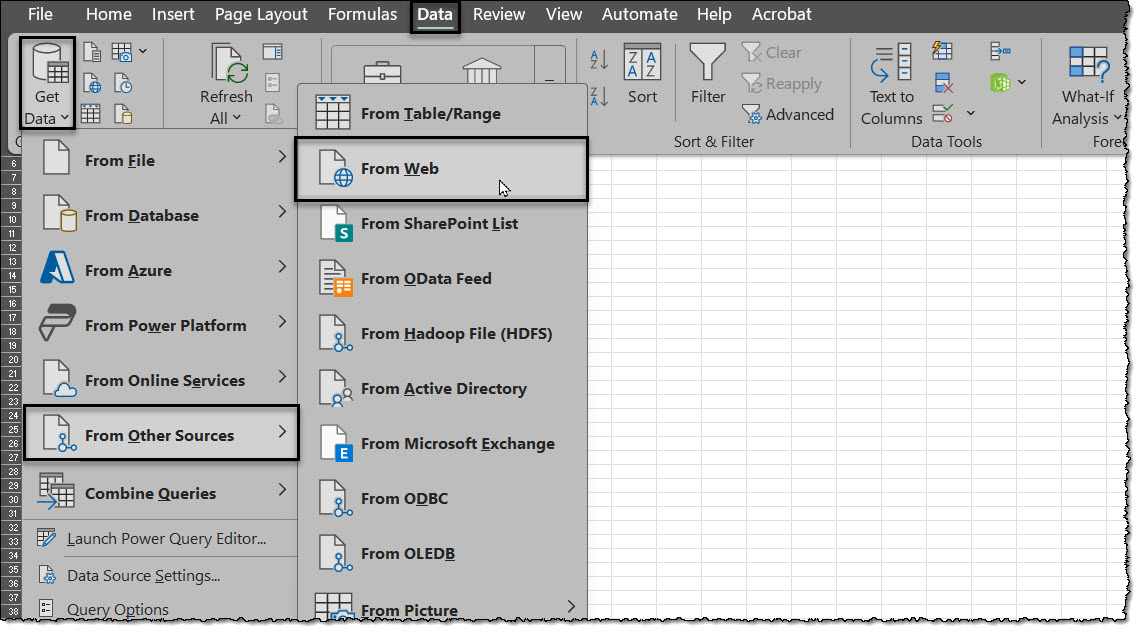
- Click Data in the top menu bar, then navigate to Get Data > From Other Sources > From Web.
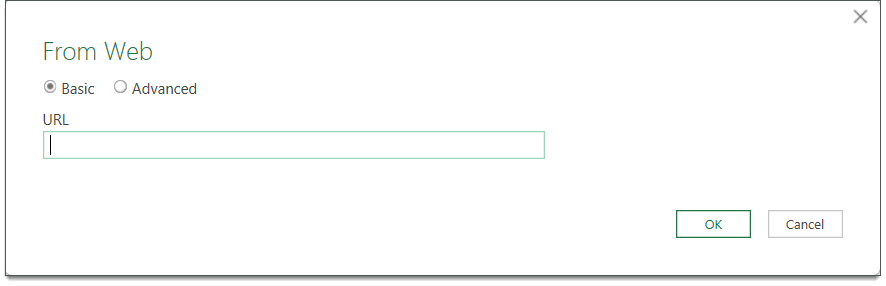
- The From web window is displayed, prompting you to enter a URL
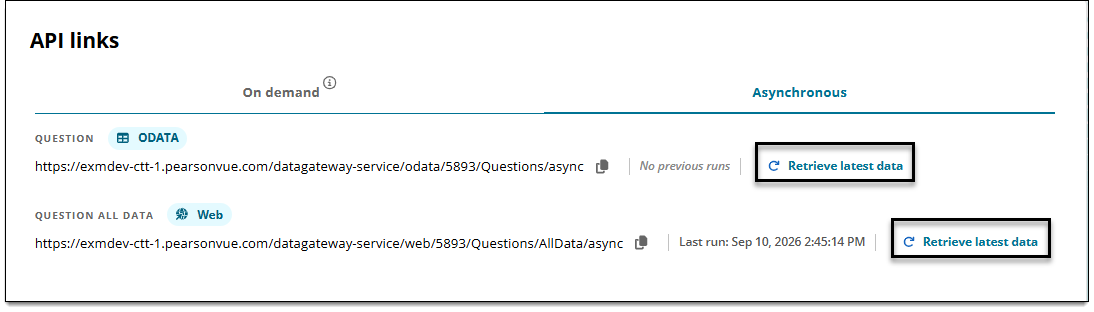
- In ExamDeveloper on the Access Token page, choose a tab in the API links section (On demand or Asynchronous).
- For the Question All Data API, if your project has 2000 or more items (or has many complex items), it is recommended to use asynchronous APIs:
- Click the Asynchronous tab.
- Then click Retrieve data for the desired API. A timestamp is displayed showing the date and time of the last refresh. The data will only be available for 24 hours; after 24 hours you must click Retrieve data again.
- Click
 for the desired API. (This is your ExamDeveloper project URL.)
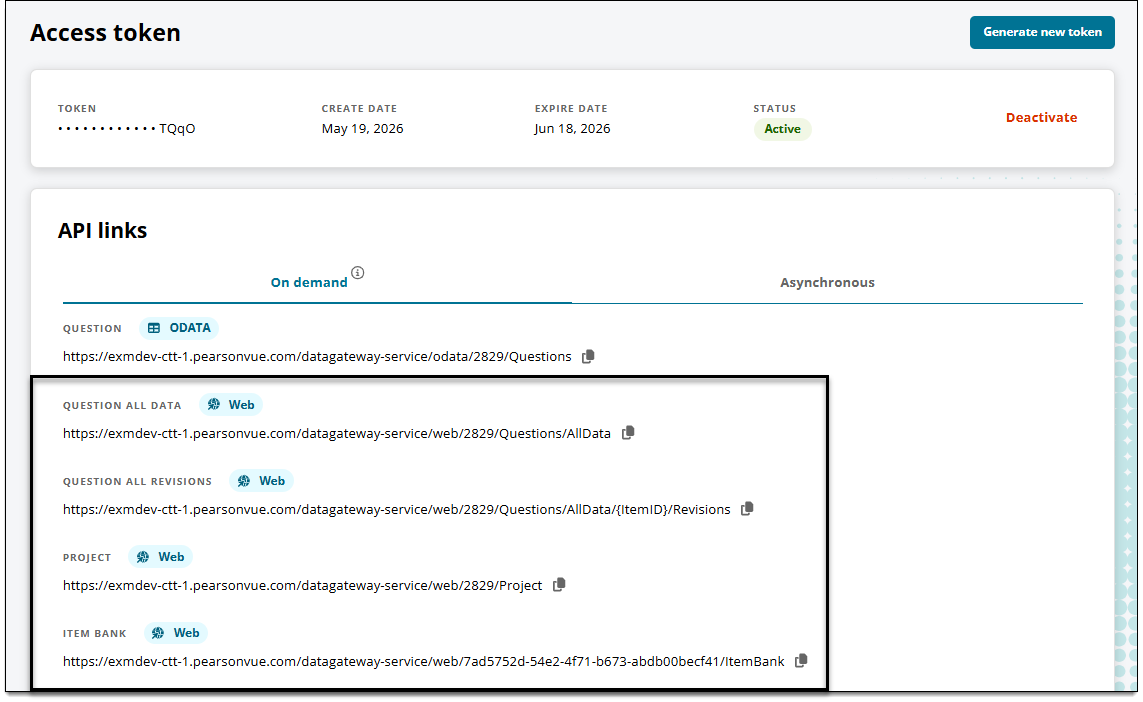
- Return to Excel and paste the ExamDeveloper project URL you just copied into the URL field. Leave Basic selected.
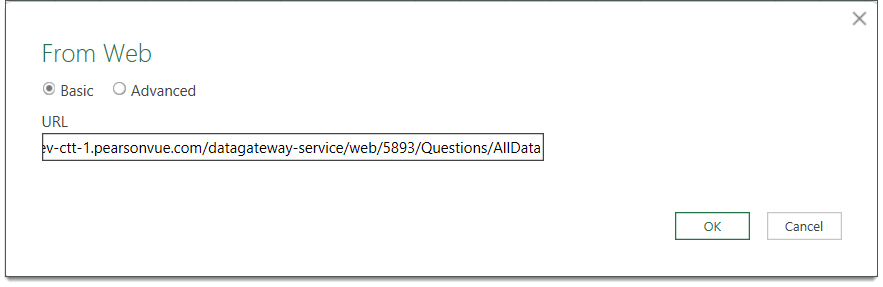
- If you are calling the Question All Revision API, you must replace itemID in the URL with an actual item ID:
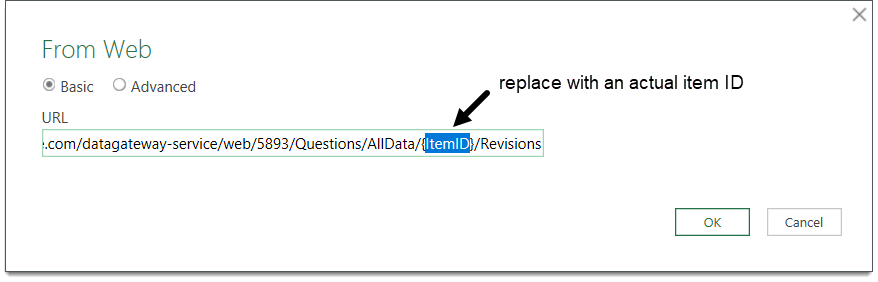
- Click OK.
- The project URL should be shown at the top of the Access Web content window. Click Basic in left navigation panel.
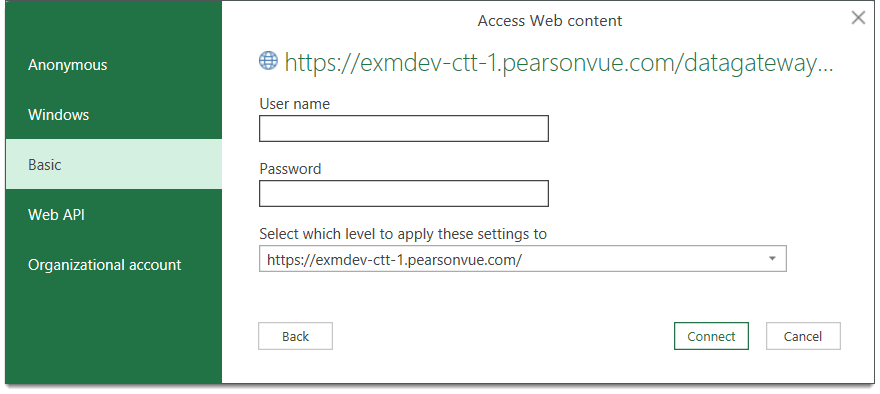
- In the User name field, enter your ExamDeveloper username. In the Password field, paste your ExamDeveloper access token. (You will need to return to the Access Token page in ExamDeveloper to copy the token.)
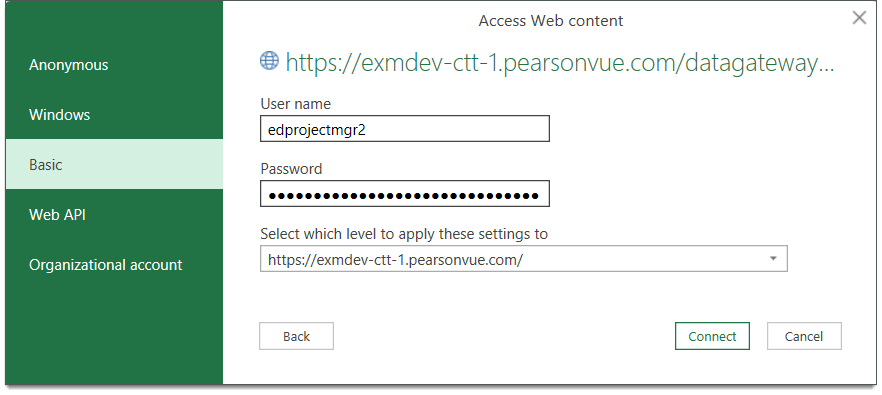
- Click Connect.
- Your data is loaded in the Power Query Editor, with separate records for each item displayed in a single column. To convert the records to a multi-column table, click To Table.
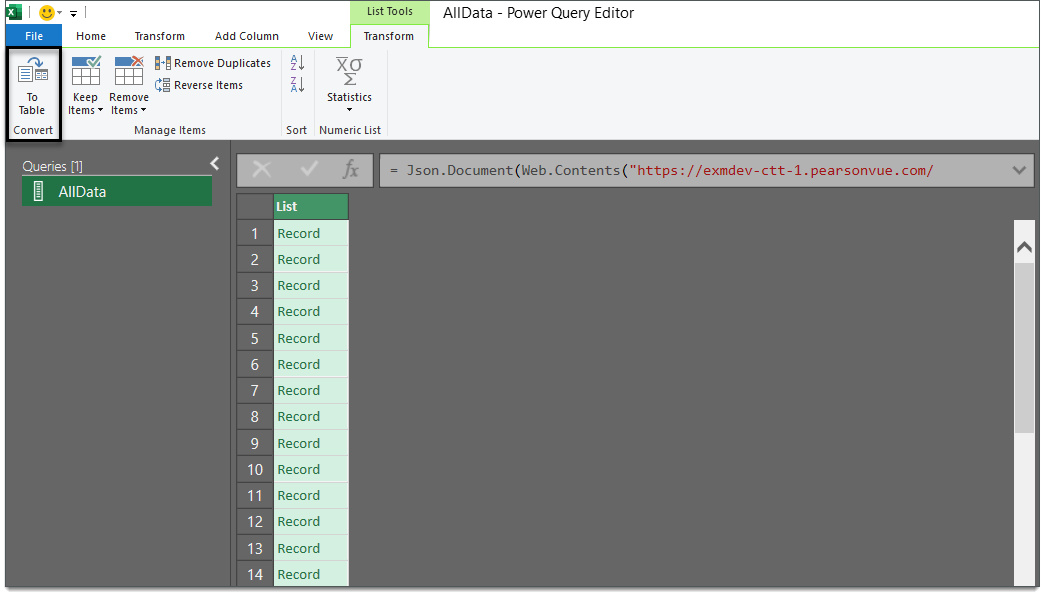
- In the To Table window, leave the settings as is (or make custom selections as needed). Click OK.
- Click the button at the top of the column header. You will then see a list of the individual columns that will be displayed in the new format.
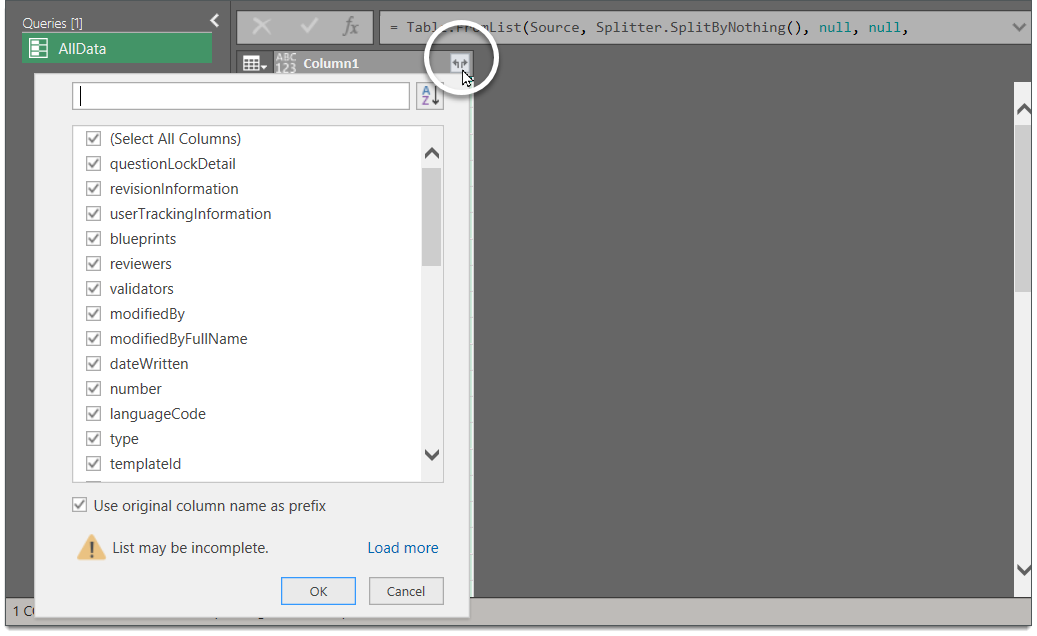
- Click OK.
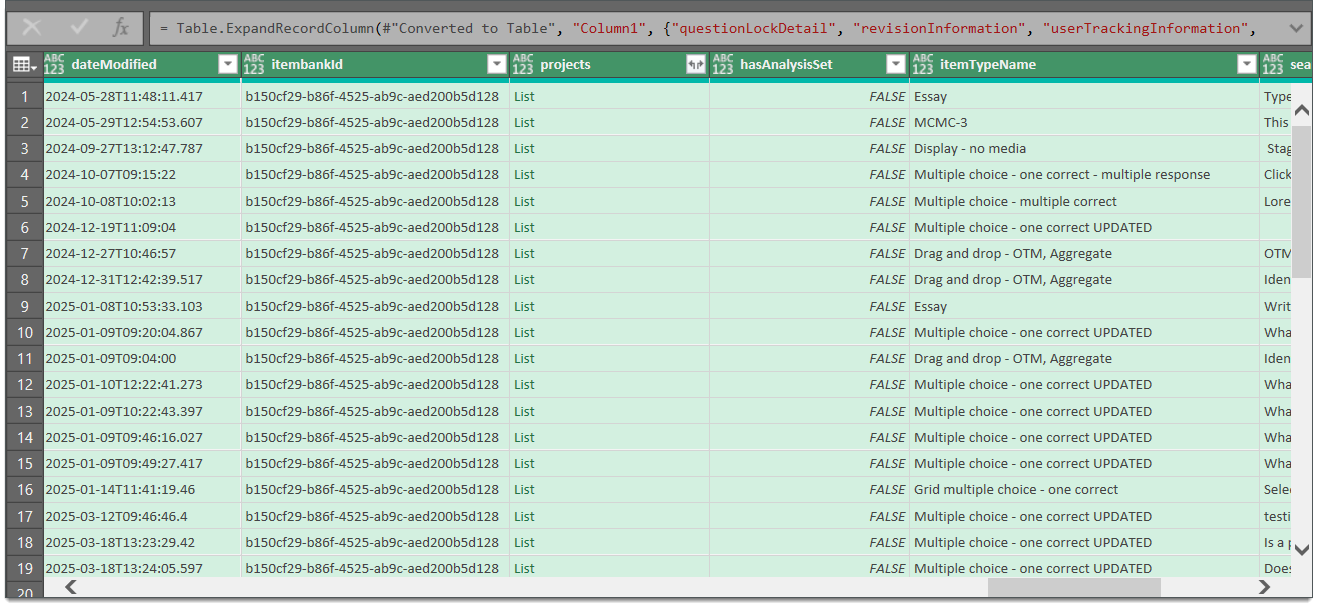
- Your data is displayed in a table format.
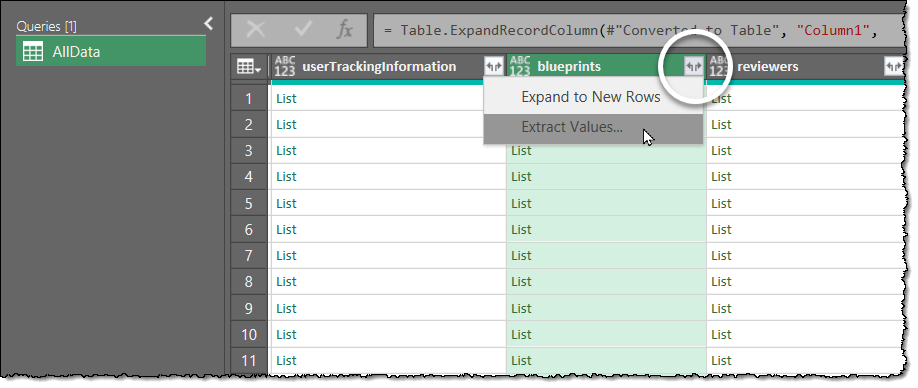
- For any columns with values shown as List, you can extract the values by clicking the button at the top of the column and selecting Extract Values.
|
|
Refresh your data
Once an ExamDeveloper token is connected to a spreadsheet or dashboard in Excel, the data can be refreshed to populate the most recent project data.
|
A new token will remain active for at least 30 days, unless it is deactivated or an item bank manager locks it. The token's expiration date will be extended by 30 days each time it is used. ('Used' refers to each time the data is refreshed in your spreadsheet, dashboard, etc.) However, you must generate a new token every 90 days regardless of your current token's expiration date or status. |
- Open your existing spreadsheet or dashboard in Excel.
- Click Data in the top menu bar.
- Click Refresh all.
- The most recent project data will be populated on all relevant pages or tabs in your existing spreadsheet or dashboard.
A few notes about the data columns:
- Item type refers to the name of the item type template that is in created in ExamDeveloper (Manage > Configuration > Item types). For example, if your project contains several template versions of Multiple Choice - One Correct, the name of the template version is shown in this column, not the item type which is just "Multiple choice - one correct".
- The Blueprint column will show only the most granular level that the item is currently classified under. For example, if the blueprint hierarchy contains the domain "1. Apples" with a sub-domain of "1.A Gala" and the item is classified under "1.A Gala", only "1.A Gala" will show and "1. Apples" will be left out.
- if an item is shared in other projects and has a different blueprint classification within those projects, those classifications will be shown in the Other blueprints column.